
• Manufacturing Outlook
  • /
  • Industrial Training
  • /
  • Top Industrial Training Services Companies
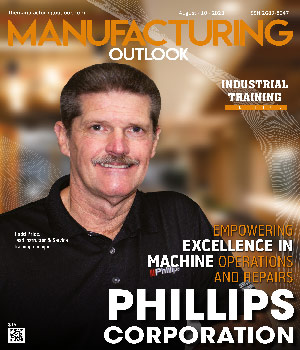
  • Phillips Corporation: Empowering Excellence in Machine Operations and Repairs

    Top 10 Industrial Training Services Companies - 2023


    In the ever-evolving landscape of modern industries, the significance of industrial training cannot be overstated. Industrial training serves as the bridge that connects theoretical knowledge to practical skills, effectively preparing the workforce for the dynamic challenges of the future. As we progress into an era defined by technological advancements and global competition, investing in comprehensive and cutting-edge industrial training programs becomes imperative to foster a skilled and adaptable workforce.

    Industrial training offers a unique opportunity for aspiring professionals and students to gain firsthand experience in real-world work environments. The traditional education system undoubtedly equips individuals with theoretical knowledge, but it is only when this knowledge is put into practice that true expertise is honed. By undergoing industrial training, individuals not only acquire technical skills but also develop problem-solving abilities, critical thinking, and effective communication – attributes that are essential in a modern workplace.

    One of the most significant advantages of industrial training is its potential to address the prevailing skills gap. As industries rapidly advance, the demand for specialized skills continues to grow. However, educational institutions often struggle to keep pace with these changes, leading to a mismatch between the skills graduates possess and the skills that employers seek. Industrial training intervenes by providing hands-on learning experiences that align with the needs of industries, thereby producing job-ready professionals capable of meeting employers’ expectations from day one.

    Industrial training stands as an essential pillar in building a skilled and resilient workforce that can navigate the challenges of the future with confidence. By promoting collaboration, investment, and inclusivity, we can harness the full potential of industrial training and pave the way for a prosperous, innovative, and competitive future for industries and economies worldwide. Let us recognize its significance and prioritize its implementation to create a workforce equipped to thrive in the face of an ever-changing world.
      Top Industrial Training Services Companies

      Phillips is a leading provider of comprehensive training programs in machine maintenance, repair, and programming. With a focus on hands-on learning and practical experiences, Phillips offers premium training opportunities that equip individuals with the skills and knowledge necessary to excel in their roles. ... read full profile
      Allen Safety is a small, veteran-owned, family-run business that aims to deliver process improvement and safety to its manufacturing and production clients. The company drives workplace injuries to zero while improving employee engagement, facility efficiencies, and profitability for clients. ... read full profile
      BEST Inc. provides IPC-certified PCB rework, modification, and inspection training or solder certification courses to technicians. It offers customized instructor and operator-level courses, such as IPC J-STD-001, IPC-A-600, and IPC/WHMA-A-620, to meet specific standards or criteria for solder certification. ... read full profile
      Developing a copyrighted methodology from best practices seen at highly reliable organizations that have avoided catastrophes in stressful factory environments, HES’ human error reduction program is a combination of safety and quality-related knowledge delivery. When fully implemented, the training is a hundred percent effective in reducing flaws synonymous with live personnel. ... read full profile
      ManageAssist provides customized on-site training services to manufacturers and distributors. It aims to enhance the skills of incumbent workers at all levels, develop its client's growth potential, and help them remain cost-effective and efficient in the face of increasing trends of businesses returning from offshore operations. It also offers assistance in securing state funding via grants to support training endeavors. ... read full profile
      TAP Services is a leading company revolutionizing electrical management. It guarantees the durability, safeguarding, and security of clients' electrical systems through an extensive array of services. The company excels in delivering accurate documentation, asset sustainability, and personalized programs, resulting in optimized efficiency and cost savings. It has a remarkable track record of delivering impressive results and prioritize customer satisfaction, reflected in its high retention rate. TAP Services has accumulated 25+ years of industry experience, positioning it as a reputable and dependable partner for all electrical system needs. ... read full profile
      Advanced Technology Services
      Advanced Technology Services is a leading services provider with nearly four decades of proven experience in technology-driven industrial maintenance and MRO asset management. Through a technically skilled workforce, best-in-class processes, and Industry 4.0 technologies, they deliver improved asset health and productivity to many leading process and discrete manufacturers
      PIXO VR
      PIXO VR offers a complete, end-to-end, extended reality (XR) solution for enterprise. Their patent-pending content distribution, management, and analytics platform makes XR — including virtual reality (VR), augmented reality (AR), and mixed reality (MR) applications — easier to manage than ever before
      Sanmina
      Sanmina Corporation is a leading integrated manufacturing solutions provider serving the fastest-growing segments of the global Electronics Manufacturing Services (EMS) market. Recognized as a technology leader, Sanmina Corporation provides end-to-end manufacturing solutions, delivering superior quality and support to Original Equipment Manufacturers (OEMs)
      Scientific Management Techniques
      Scientific Management Techniques provides manufacturing skills solutions. Their Industrial Skill Assessment Programs identify and measure the skills required to operate, maintain, and troubleshoot a modern manufacturing facility. Identifying skills and competencies prior to hire is the single most effective means to ensure a quality hire and drive productivity in industry

    Industrial Training Info

    Q1
    What Do Top Industrial Training Companies Do for Manufacturers?
    Top Industrial Training Companies help manufacturers build practical workforce skills for plant floors, maintenance teams, safety roles, supervisors and technical specialists. Their work may cover equipment use, welding, PLCs, compliance training, stormwater practices, quality procedures or leadership development. In a manufacturing setting, training must connect classroom instruction to real tasks: machine setup, inspection routines, lockout steps, documentation and troubleshooting. Strong industrial training providers understand that skill gaps can show up as scrap, downtime, injuries, missed audits or slow onboarding.
    Q2
    Why Does Industrial Training Matter for Manufacturers Now?
    Top Industrial Training Companies matter because manufacturers are dealing with a tighter skills pipeline, aging technical knowledge and faster equipment changes. A plant can buy advanced machinery, but productivity still depends on whether people know how to run, maintain and document the work around it. Demand is being shaped by automation, safety expectations, compliance checks and the need to train new workers faster. Manufacturing workforce training has moved beyond orientation; it now sits closer to risk control, quality assurance and production planning.
    Q3
    How Should Decision-Makers Evaluate Industrial Training Companies?
    Evaluation should begin with fit to the plant environment. A useful provider understands shift schedules, equipment constraints, safety rules and the difference between generic instruction and shop-floor learning. Decision-makers should examine instructor credibility, curriculum depth, hands-on components, assessment methods and whether training can be adapted for supervisors, technicians or entry-level workers. Industrial training companies also need clear documentation practices, especially when training supports audits, certifications or regulated procedures. Good training leaves managers with evidence that learning occurred, not just attendance sheets.
    Q4
    What Business Value Can Top Industrial Training Companies Deliver?
    Top Industrial Training Companies create value when training changes daily work behavior. Better instruction can reduce rework, speed up equipment changeovers, improve inspection discipline and help maintenance teams diagnose recurring faults. Safety training can make procedures more consistent across shifts. Leadership and communication programs can reduce confusion between production, quality and maintenance teams. The benefit is rarely a single dramatic event. It is usually visible in fewer avoidable mistakes, cleaner handoffs, steadier onboarding and stronger confidence among workers asked to handle complex tasks.
    Q5
    How Are Technology and Expertise Changing Industrial Training Programs?
    Technology is changing how training is delivered, but expertise still decides whether it works. Simulators, digital modules, video libraries, learning platforms and remote instruction can help standardize lessons across sites. They are most useful when paired with field-experienced instructors who understand noise, time pressure, tool wear, safety habits and real production bottlenecks. Technical training programs should also be refreshed as equipment, codes and procedures change. A dated lesson can be worse than no lesson when workers rely on it during inspection or repair.
    Q6
    What Should Manufacturers Prioritize When Comparing Top Industrial Training Companies?
    Manufacturers comparing Top Industrial Training Companies should prioritize relevance, proof of learning and long-term fit. The right provider should be able to explain how its training maps to specific job roles, equipment types, compliance needs and measurable plant concerns. Buyers should look for practical exercises, supervisor visibility, post-training evaluation and materials workers can use after the class ends. Cost matters, but weak training can be expensive when it leads to downtime, audit gaps, injuries or repeated mistakes on the line.
    Take Me Top